

How to clean water stains on glass, mirrors and windows

By Urban Company
6 min read
Nov 14, 2026
Two cloths for streak-free mirrors and windows, and the vinegar soak that clears a cloudy shower screen glass cleaner can’t shift.
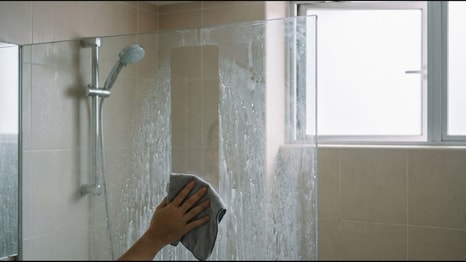
It’s 4pm on a Saturday in a west-facing Jurong West flat. You’ve just sprayed and wiped the living room window, and with the sun on it, it looks worse than before you started — every sweep of the cloth is now a visible streak. In the bathroom, the shower screen has been cloudy for months, and no amount of glass cleaner has made a difference.
Key takeaways
Cloudy shower glass is limescale rather than dirt — glass cleaner cannot shift a mineral deposit, which is why the screen looks no better after cleaning. It needs a mild acid such as white vinegar.
Streaks on windows and mirrors are a drying problem, not a cleaning problem. Use 2 microfibre cloths — 1 damp to clean, 1 dry to buff — and wipe before the cleaner dries.
Never clean glass in direct sunlight. Warm glass dries the cleaner on contact, which is exactly what leaves streaks.
Never mix bleach with vinegar or ammonia. Many glass cleaners contain ammonia, and both combinations release toxic gas.
If the cloudiness survives a vinegar soak, the glass may be etched — that is permanent damage, not a stain.
Those are 2 different problems that happen to look alike. Here’s how to tell them apart, and fix each one.
Why does glass look worse after you clean it?
Glass looks worse after cleaning when the cleaner dries on the surface before it is wiped off.
What’s left is a thin film of detergent and loosened grime, and light shows it up as streaks. A cloudy haze that stays no matter how much you wipe is a different thing: a mineral deposit bonded to the glass.
What you see
Likely cause
Fix
Streaks after wiping
Cleaner dried on glass
Two cloths, out of sun
White spots, cloudy film
Limescale
Warm vinegar soak
Greasy smears
Fingerprints, oil
Dish soap, then buff
Cloudy after vinegar
Etched glass
Can’t be cleaned out
How do you clean glass and mirrors without streaks?
Clean with 1 damp microfibre cloth and buff dry immediately with a second, dry one.
The second cloth does most of the work.
Pick your moment. Early morning or evening, or a cloudy day. Afternoon sun on a west-facing window is the condition most likely to guarantee streaks.
Mix a simple cleaner. 1 part white vinegar to 1 part water in a spray bottle. For greasy glass near the stove, wipe first with warm water and a drop of dish soap.
Spray the cloth, not the glass — especially on mirrors, where liquid that runs into the edges can damage the silver backing and leave dark patches.
Wipe in an S-shape, top to bottom, so you’re never dragging dirt back over a clean patch.
Buff straight away with the dry cloth before anything evaporates. Swap to a fresh cloth once it feels damp.
Wash cloths without fabric softener, which coats the fibres and smears.
For windows, clean only what you can reach safely from inside.
Never lean out of a window, or stand on a ledge or chair at an open window, to reach the outside of the glass
— on a high floor, that is not worth a clean view.
How do you remove hard water stains from a shower screen?
Hard water stains need an acid, not glass cleaner.
Each droplet that dries on the screen leaves its dissolved minerals behind.
Singapore’s tap water isn’t especially hard, but a shower screen gets wet and dries at least once a day, and with soap residue that builds into a cloudy film no ordinary cleaner will move.
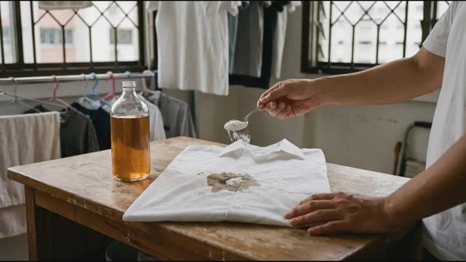
Warm some white vinegar — warm, not boiling — and soak paper towels in it.
Press the towels onto the cloudy glass so they stick, and leave them for 30 minutes.
Scrub gently with a non-scratch sponge. For stubborn spots, dip the sponge in a paste of baking soda and water.
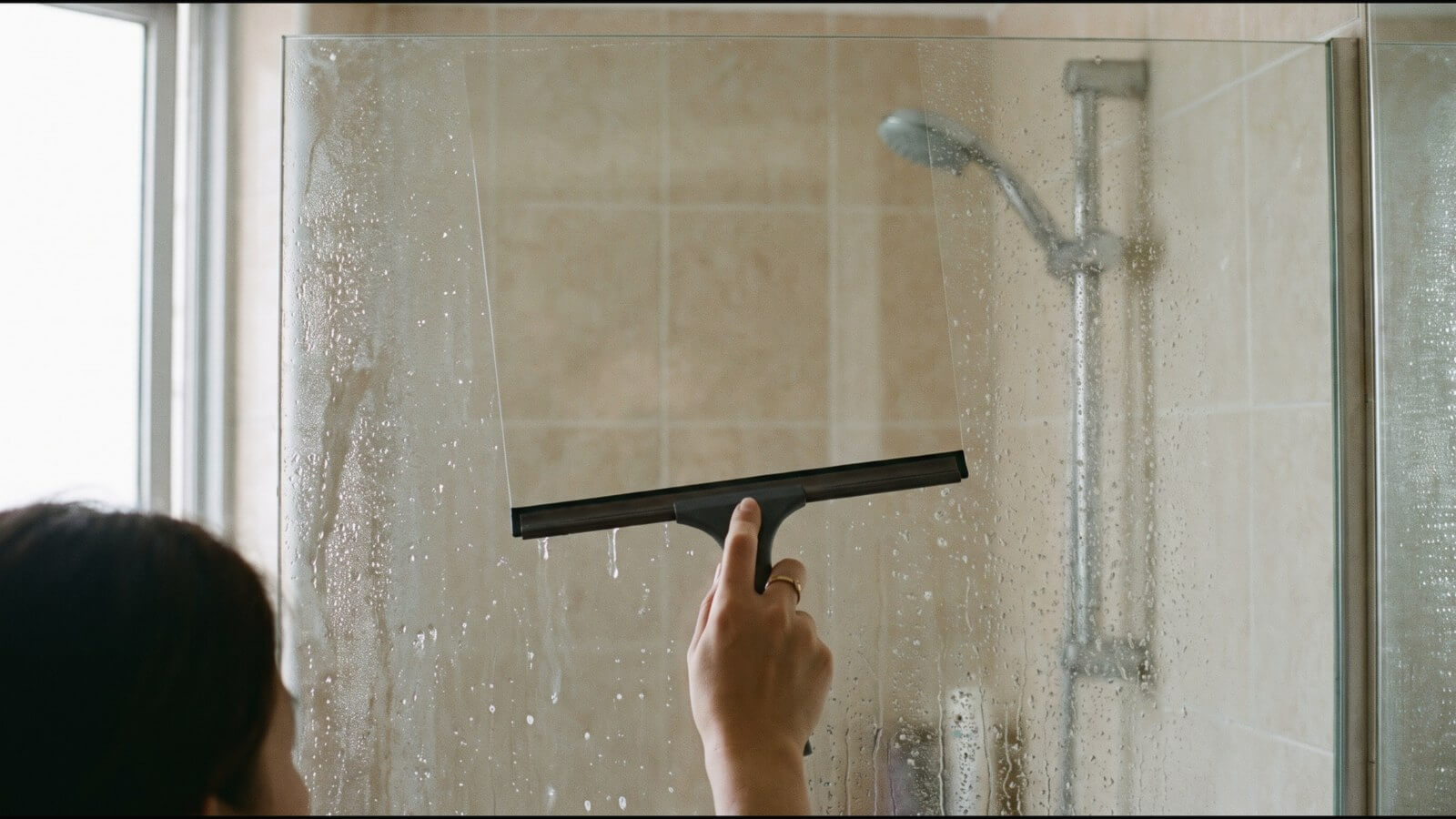
Rinse with water and dry with a squeegee.
Repeat for thick build-up. Months of limescale rarely lifts in 1 pass.
Keep vinegar off marble or other natural stone vanity tops and floors — acid dulls stone.
Prevention is 30 seconds:
run a squeegee down the screen after every shower. Water that never dries on the glass cannot leave minerals behind.
The same hard-water minerals leave white marks on taps and sinks too — our guide on
how to clean stainless steel rust and water markscovers those surfaces.
When it won’t come clean
If the glass is still cloudy after 2 or 3 vinegar treatments, the surface may be etched — years of minerals have roughened the glass itself. No cleaner can reverse that. The honest options are living with it or replacing the panel.
What should you never use on glass?
Never mix bleach with vinegar or with ammonia.
Many commercial glass cleaners contain ammonia, and this article recommends vinegar, so if you keep bleach in the bathroom, use one product at a time and rinse between them. Bleach with vinegar releases chlorine gas; bleach with ammonia releases chloramine gas. Both are dangerous in a small, closed HDB bathroom.
Also skip abrasive powders, scouring pads and razor blades on shower glass and mirrors — they scratch, and scratches trap limescale faster.
When is it worth getting a Professional?
For windows and mirrors, DIY is the right answer
— 2 cloths and a spray bottle will do it. A shower screen is different when the build-up has spread to the tiles, grout and fittings as well, because the same limescale is usually everywhere in the bathroom by then. That is where
deep cleaning differs from regular cleaning.
Urban Company’s Bathroom Deep Cleaning, from
$65
, uses high-temperature steam disinfection and heavy-duty-tool scrubbing for the whole bathroom, not just the glass.
See Bathroom Deep Cleaning and book a professional bathroom clean in Singapore.
The same mineral deposits that mark glass also clog shower nozzles and stain toilets. See
how to clean a shower head and a stained toilet bowl.
Frequently asked questions
Why does glass streak after cleaning?
Streaks are a drying problem, not a cleaning one. They appear when cleaner or dirty water dries on the glass before it is wiped off, or when the cloth leaves residue behind. Use 1 damp microfibre cloth to clean and a second, dry one to buff straight away, and work out of direct sunlight.
Does newspaper really clean windows better than cloth?
Not any more. Newspaper worked when printing inks were different, and it does leave little lint. Today’s newsprint can smudge ink onto window frames and falls apart once wet. A flat-weave microfibre cloth does the same job better, can be washed and reused, and leaves no lint or ink behind.
How do you remove hard water stains from a shower screen?
Use an acid, not glass cleaner. Soak paper towels in warm white vinegar, press them onto the cloudy areas, and leave them for 30 minutes. Scrub gently with a non-scratch sponge, rinse, and dry with a squeegee. Repeat for thick build-up. If the glass is still cloudy after that, it may be etched.
Can you use vinegar on mirrors?
Yes. Diluted white vinegar, 1 part to 1 part water, cleans mirrors well and leaves no residue. Spray it onto the cloth rather than the mirror, because liquid that runs into the edges can damage the silver backing over time and cause dark patches. Buff dry with a second clean cloth.
Why should you not clean windows in direct sunlight?
Sun-warmed glass dries the cleaner almost as soon as it goes on, so it leaves streaks and residue before you can wipe it off. In Singapore, a west-facing window in the afternoon is the worst case. Clean in the early morning, in the evening, or on a cloudy day instead.
Does a Part-time Cleaner clean windows?
Yes. Urban Company’s part-time cleaner page lists mirrors and windows among what the cleaner cleans, along with floors, bathrooms, dusting, dishes and trash. If there is particular glass you want done, mention it when you book.
Checkout Our Latest Articles

Social links