

How to clean an iron soleplate and stop brown marks

By Urban Company
6 min read
Nov 14, 2026
Brown marks from your iron? Match the fix to what is stuck on: melted fibre, burnt starch or limescale in the steam vents.
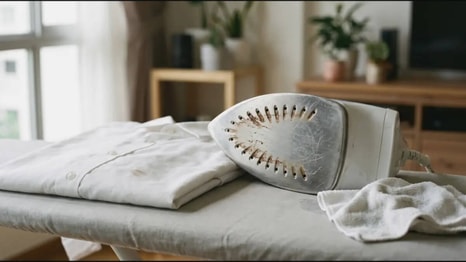
It’s 7.30am on a Monday, your work shirt is on the board, and the iron leaves a pale brown streak right across the front. You wipe the soleplate, try again, and it happens a second time.
Key takeaways
A brown mark from an iron is usually limescale flushed out of the steam vents rather than dirt on the soleplate, which is why cleaning the plate alone does not stop it happening again.
Match the fix to what is stuck on. Melted fibre, starch build-up and limescale are three different problems with three different treatments.
Unplug the iron and let it cool before cleaning the soleplate — the only exception is melted fibre, which comes off best while the plate is just warm.
Never use steel wool, scouring pads or metal scrapers on a non-stick or ceramic soleplate. The scratches catch fabric and make every future problem worse.
Check the manual before descaling. Some irons tolerate vinegar in the tank and some do not.
Cleaning the plate harder rarely fixes this, because the plate is often not the problem. Here’s how to tell what is.
Start every method the same way.
Singapore’s Consumer Product Safety Office advises that you
never leave an iron unattended while it is connected to the mains, always disconnect a steam iron before refilling it with water, and disconnect it after use. Every fix below begins with the plug out of the socket.
What is actually stuck on your iron?
Look at the soleplate and the steam holes before you clean anything.
Each kind of residue needs its own fix, and using the wrong one is usually why the first attempt didn’t work.
What you see
What it is
How to fix it
Sticky dark patch
Melted fibre
Warm iron + spatula
Dull brown film
Burnt-on starch
Baking soda paste
White crust in vents
Limescale
Self-clean or descale
Marks on delicates only
Iron too hot
Lower the heat
How do you get melted fabric off an iron?
Take melted fibre off while the iron is warm, not hot and not cold.
Once it has cooled and hardened, it bonds to the plate.
Set the iron to its lowest setting, let it warm, then unplug it.
Ease the softened residue off with a wooden or silicone spatula. Never use a knife or anything metal.
Iron over an old, clean cotton towel to pick up what is left.
Let the iron cool completely, then finish with the baking soda method below if a film remains.
A warm soleplate still burns. If your hand slips, HealthHub’s first-aid advice is to
run cool water over the burnt area for 20 minutes, and not to use ice.
How do you clean a burnt soleplate?
For burnt-on starch and residue, use a baking soda paste on a cold, unplugged iron.
It is mildly abrasive but gentle enough for most soleplate coatings.
Unplug the iron and wait until it is completely cool.
Mix 2 tablespoons of baking soda with 1 tablespoon of water into a thick paste.
Spread it over the stained areas and leave it for a few minutes.
Wipe it off with a damp microfibre cloth, working the paste gently over stubborn spots.
Clear each steam hole with a cotton bud so paste doesn’t bake into the vents.
Heat the iron and run it over an old cotton towel before you touch a good shirt.
How do you clear limescale from the steam vents?
Start with the manual, because descaling is where irons differ most.
Every time water evaporates inside a steam iron, it leaves its minerals behind. Singapore’s tap water is safe to drink, but it is not mineral-free:
PUB’s 2025 drinking water quality figureslist calcium and other dissolved solids in the supply. Over months that scale narrows the vents, and eventually flakes of it are pushed out with the steam — straight onto the clothes.
If your iron has a self-clean or anti-calc function, use it. Most work the same way: fill the tank with the iron unplugged, then heat it, hold it over the sink, and press the button to flush hot water and scale out through the vents.
If it has a removable anti-scale cartridge or valve, rinse or replace it as the manual says.
If the manual allows vinegar, use a diluted solution — never undiluted — then rinse the tank with plain water and steam it through before ironing anything.
Never mix vinegar with bleach.
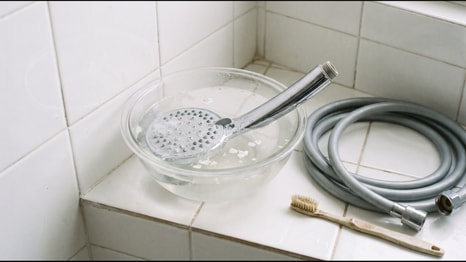
Together they release chlorine gas, which is dangerous in a small HDB kitchen or service yard. The same logic applies to limescale on a shower head, and so does the bleach warning. For any cleaner, the Consumer Product Safety Office’s advice is to
read the label and follow the manufacturer’s instructions, including adequate ventilation.
The habit that prevents most of this is simple:
empty the tank after every use.
Water left standing in a hot iron is what scale builds from.
Why does so much ironing pile up in the first place?
In Singapore’s humidity, clothes that are folded before they are fully dry crease badly and can smell musty.
Hanging shirts straight from the line or the dryer saves a surprising amount of ironing. So does ironing slightly damp cotton, which presses faster than bone-dry fabric.
Clean clothes start in the drum, too. A musty machine passes residue onto the shirt before the iron touches it, so learn
how to clean a washing machine. And if the iron has already left a brown mark on something you love, try
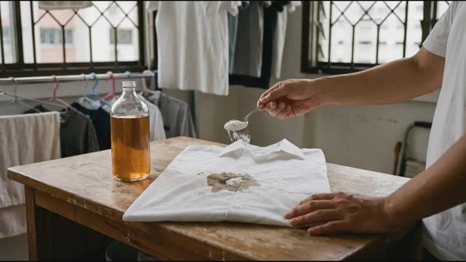
these stain-removal methods for clothesbefore you write it off.
If ironing is the chore that never ends, Urban Company has a separate Ironing & Laundry service, booked in the Urban Company app; see
what at-home ironing costs in Singapore. For the rest of the house,
weekly/biweekly home cleaningstarts from $38 for 2 hours, with the same trusted cleaner each visit and the cleaning kit brought along.
Frequently asked questions
How do you clean a burnt iron soleplate?
Unplug the iron and let it cool. Mix 2 tablespoons of baking soda with 1 tablespoon of water, spread the paste over the burnt patches and leave it a few minutes. Wipe it off with a damp cloth, clear the steam holes with a cotton bud, then heat the iron and run it over an old cotton towel.
What removes melted plastic from an iron?
Work while the iron is warm, not hot — set it to its lowest setting and unplug it. Ease the softened plastic off with a wooden or silicone spatula, never a metal one. Iron over an old cotton towel to pick up the rest. Once the iron is cold, a baking soda paste will lift any film that remains.
How do you unclog the steam vents on an iron?
Check the manual first. Many steam irons have a self-clean or anti-calc button that flushes the vents with hot water and steam over a sink. If yours has one, use it. If not, clear each vent gently with a cotton bud or a toothpick, and only descale the water tank with a vinegar solution if the manufacturer allows it.
Can you use vinegar to descale an iron?
Sometimes. Some manufacturers allow a diluted white vinegar solution in the water tank, but others warn against it because acid can damage the internal parts. The manual decides. Never put undiluted vinegar in the tank, and never mix vinegar with bleach — together they release toxic chlorine gas.
Should you use tap water in a steam iron?
Follow the manual. Tap water leaves minerals behind every time it evaporates, and that scale eventually clogs the vents and flakes out as brown marks. Many irons are designed for tap water or a tap-and-distilled mix, while some advise against distilled water alone. Emptying the tank after each use helps either way.
Why does my iron leave brown marks on clothes?
Usually one of three reasons: limescale being flushed out of the steam vents, starch or fabric residue burnt onto the soleplate, or an iron set too hot for the fabric. Clean the plate, descale the vents, and check the heat setting against the care label before blaming the iron.
Checkout Our Latest Articles

Social links