

How to clean vinyl flooring without damaging it

By Urban Company
6 min read
Nov 14, 2026
How to clean vinyl flooring in a Singapore flat: a 4-step method, what never to use, and fixes for stains and dirty grooves.
It’s Saturday morning in your new 4-room BTO in Tengah, and the bedroom vinyl that looked so good at handover already has a grey line in every groove. Your parents mop their Ang Mo Kio flat with a full pail and a squeeze mop, as they have on tiles for 30 years. On vinyl, that’s the habit to drop.
Key takeaways
Clean vinyl flooring by sweeping first, then mopping with a microfibre mop wrung until barely damp and a few drops of pH-neutral cleaner in lukewarm water.
Never use a steam mop, undiluted bleach, scouring pads or floor polish.
SPC and LVT planks are waterproof, but the joints between them are not. Standing water seeps underneath, and in Singapore’s humidity it dries slowly.
Most stains lift with dish soap, baking soda paste or a little rubbing alcohol. Yellow patches under rubber-backed mats usually don’t.
A lifting or peaking plank is an installation or water problem, not a cleaning one.
How do you clean vinyl flooring?
Sweep or vacuum, then mop with a well-wrung microfibre mop and a mild, pH-neutral cleaner, drying wet patches as you go.
Get the grit off first. Use a soft broom, or a vacuum on its hard-floor setting with the brush bar off. Grit is what scratches vinyl.
Mix a mild solution. A few drops of pH-neutral cleaner or dish soap in a pail of lukewarm water. More soap leaves a sticky film.
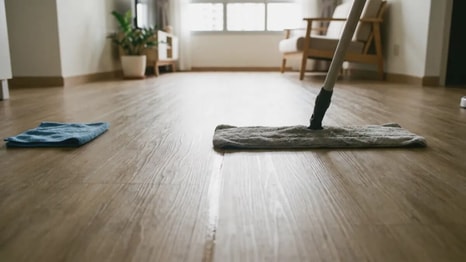
Wring the mop until it’s barely damp, and work towards the door, from one end of the room to the other, so you never walk over the part you’ve just done.
Dry what’s still wet, then dry the mop. Wipe puddles with a dry microfibre cloth, and let the mop head air-dry rather than sit in the pail.
A weekly mop is plenty for most flats.
Why does water matter if vinyl is waterproof?
Because the planks are waterproof, but the floor as a whole isn’t.
Most vinyl in Singapore homes is laid as a “floating” click-lock floor: the planks lock together and rest on the screed or old tiles without glue. Water on top runs into the joints and settles underneath, out of a mop’s reach.
Singapore’s relative humidity
averages around 82% and climbs above 90% before sunrise, so trapped water dries very slowly.
Floor type
Usually laid
Weak point
SPC
Click-lock, floating
Water through joints
LVT
Click-lock or glued
Dents, wet edges
Sheet vinyl
Glued, large sheets
Seams lifting
A wet vinyl floor is slippery too. HealthHub notes that
most falls at home are caused by clutter or hazards such as slippery floors, so if an older parent lives with you, dry the floor straight after mopping.
What should you never use on vinyl flooring?
Steam mops, undiluted bleach, scouring pads and wax or “mop and shine” polish.
Each damages vinyl differently, and none is needed.
Avoid
Why
Steam mop
Heat into the joints
Undiluted bleach
Dulls the wear layer
Scouring pads
Permanent scratches
Wax or polish
Cloudy, tacky film
Rubber-backed mats
Yellow stains
A dripping mop
Water under the planks
How do you clean vinyl flooring stains?
Start with warm water and dish soap, and step up only if the stain stays.
Test anything stronger somewhere hidden first.
Food and drink (kicap, curry, coffee): dish soap on a microfibre cloth. For a dried mark, leave baking soda paste on for a few minutes, then wipe off without scrubbing.
Black scuffs: a dry microfibre cloth or a dab of baking soda paste.
Ink and marker: a little rubbing alcohol on a cloth, then a plain-water rinse.
Sticker residue: a few drops of cooking oil to loosen it, then dish soap.
Yellow patches under a mat: usually the rubber backing, and usually permanent. Switch to a cotton or non-rubber backing. If the rug itself needs work, here’s how to clean carpets and rugs at home.
How do you get dirt out of the grooves?
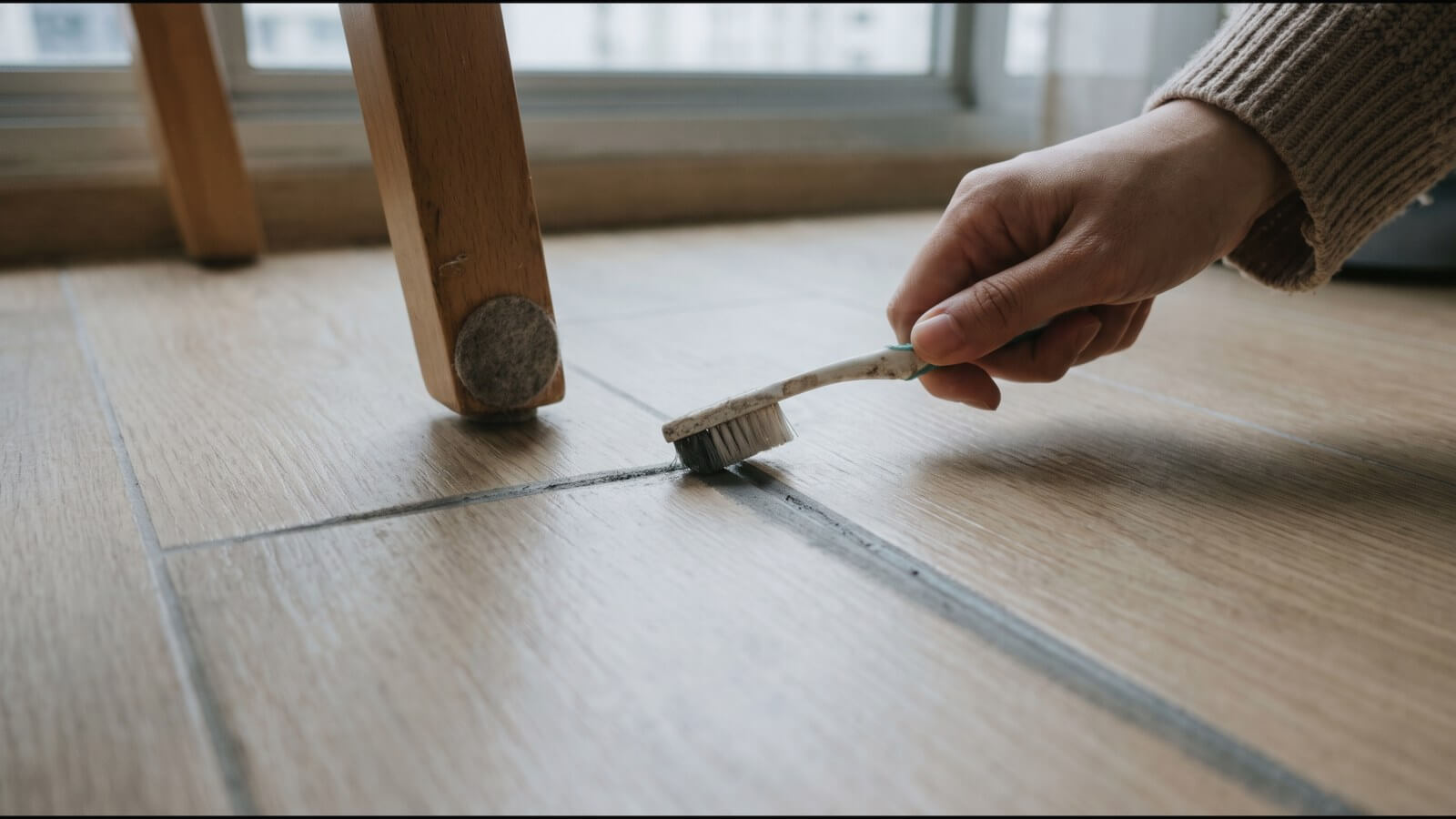
Brush each groove with a soft brush or old toothbrush, then vacuum with the crevice tool.
Bevelled plank edges collect the grime a flat mop glides over. Then mop along the length of the planks rather than across them, so the mop follows the grooves.
How do you clean a vinyl floor after renovation?
Vacuum first, then damp-mop twice, and never wipe the fine white dust off dry.
The dust is abrasive. Lift dried paint with a plastic scraper, never a metal blade.
How do you stop vinyl getting scratched?
Keep grit out, put felt pads under furniture legs, and lift instead of dragging.
A doormat and shoes left outside catch most grit, and a chair mat protects the floor from office-chair castors.
When is it not a cleaning problem?
When a plank lifts, peaks, feels soft or a gap keeps widening.
Mopping won’t fix these.
A gap along the skirting is normal — the floor needs room to expand. Don’t fill it with silicone.
Peaking or lifting planks usually mean water underneath, or heavy carpentry pinning the floor. Call whoever laid it.
A musty smell or soft plank means finding the leak first: washing machine inlet, aircon pipe or bathroom doorway.
In a new flat where the floor came with it, check with HDB whether it is still under the defects liability period before you pay for repairs.
Everything above that list is a fair DIY job.
What if the weekly mop keeps slipping?
Hand it to a regular cleaner, and tell them once that the floor is vinyl
: wring the mop dry, no steam mop. Urban Company’s weekly/biweekly cleaning starts from $38 for 2 hours, with the same trusted cleaner each time, so it only needs saying once.
See the plans and book a home cleaner in Singapore. If the whole flat needs a reset, read
how deep cleaning differs from regular cleaning.
Frequently asked questions
Can I use a steam mop on vinyl flooring?
It’s best not to. A steam mop drives heat and moisture into the joints of click-lock SPC and LVT planks, which can soften plank edges or loosen glue-down adhesive. Many manufacturers’ care sheets advise against it. A microfibre mop wrung until barely damp cleans just as well.
What is the best way to clean vinyl flooring?
Sweep or vacuum off the grit, then mop with a microfibre mop wrung until barely damp and a few drops of pH-neutral cleaner or dish soap in lukewarm water. Mop along the planks, finish at the door and dry wet patches. Mopping weekly suits most flats.
Can I use vinegar or bleach on vinyl floors?
Diluted vinegar is mild, but some manufacturers advise against acidic cleaners, so check your care sheet first. Never use bleach undiluted. To disinfect, dilute the product exactly as the label says, wipe it on with a damp mop rather than pouring it, then mop over with plain water.
How do I remove yellow stains from vinyl flooring?
Yellow patches under a doormat or rug usually come from rubber backing reacting with the vinyl, and they are often permanent. Move the mat and switch to a cotton or non-rubber backing so the stain doesn’t spread. Yellowing from spills may lift with baking soda paste.
How do I clean dirt stuck in the grooves of vinyl planks?
Brush along each groove with a soft-bristled brush or old toothbrush, vacuum with the crevice tool, then wipe with a barely damp microfibre cloth. Mop along the length of the planks, not across them, so the mop follows the grooves. Once a month is usually enough.
Why are my vinyl planks lifting or separating?
Usually water underneath, or a floating floor pinned by heavy furniture so it can’t expand and contract. Cleaning won’t fix it. Stop any leak, then call whoever installed the floor. In a new flat, check with HDB whether the floor is still under the defects liability period.
Checkout Our Latest Articles
Social links