

What is formaldehyde, and why remove it after renovation?

By Urban Company
9 min read
Nov 27, 2026
What formaldehyde is, where it comes from in a new home, safe levels in Singapore, and how to get it out.
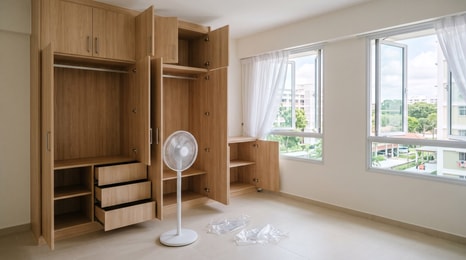
Formaldehyde is a colourless gas with a sharp smell that seeps out of new carpentry, mainly the boards and glue in built-in wardrobes, kitchen cabinets and laminate. It irritates the eyes, nose and throat, and the International Agency for Research on Cancer classifies it as a carcinogen, so it is worth getting levels down before you move into a newly renovated home. The most effective fix is ventilation: keep windows, cabinets and drawers open for several weeks after the carpentry goes in, and delay moving in, as NEA advises. Ready to book? See
Urban Company’s Formaldehyde Removal Treatment and deep cleaning prices.
Key takeaways
Formaldehyde comes mostly from new composite-wood carpentry and glue, and it is released fastest when the carpentry is new.
Short-term it irritates eyes, nose, throat and skin; long-term exposure to high levels is linked to asthma and some cancers.
The guideline most people quote is 0.1 mg/m³ (0.08 ppm), from WHO. Singapore has no legal limit for homes.
Interior paint with 0.01% formaldehyde or more has been banned in Singapore since 1 January 2026. Wood boards and glue are not regulated.
Ventilate for several weeks and open every cabinet. Plants and HEPA-only purifiers don’t remove it.
Cheap sensors are unreliable. Use a calibrated meter or an SAC-accredited lab before deciding you have a problem.
What is formaldehyde?
Formaldehyde (HCHO) is a simple chemical that is a gas at room temperature. It is used to make the resins that bind wood fibres and chips into boards such as particleboard, MDF and plywood, and it is in some glues and finishes. Those boards keep releasing small amounts into the air for a long time after they are made, a process called off-gassing. The sharp, sour smell many people notice in a newly renovated flat, the “new house smell”, is often partly formaldehyde.
Where does formaldehyde come from in a Singapore home?
Source
Why it releases formaldehyde
What to do
Built-in wardrobes, kitchen cabinets, shoe cabinets
Composite boards (particleboard, MDF, plywood) bonded with resin
Keep doors and drawers open to air them; ask for low-emission boards
Laminate and edge banding
Glue under the laminate and along the edges
Air the room; choose green-labelled products
Loose furniture: beds, desks, TV consoles
Same pressed-wood boards as carpentry
Unwrap and air in a ventilated room before use
Adhesives and some finishes
Formaldehyde-based glues
Ask your contractor what is being used
Interior paint
Formaldehyde used as a preservative in the past
Banned at 0.01% or more since 1 Jan 2026
Renovation-heavy homes have the most of it, which is why new BTO flats and fully re-done resale flats and condos are where most people first ask about it.
Is formaldehyde dangerous?
At the levels found in some newly renovated homes, it can be. According to
NEA, formaldehyde is classified as carcinogenic by the International Agency for Research on Cancer. Short-term exposure irritates the eyes, nose, skin and throat, and long-term exposure to high concentrations has been associated with asthma and some forms of cancer. Common signs people notice:
Stinging or watery eyes.
A runny nose, sore throat or cough.
Headaches, or feeling unwell in one room but fine outside.
Asthma or allergy symptoms getting worse after moving in.
Young children, older people and anyone with asthma tend to notice it first. If symptoms persist, see a doctor, and air the home while you find out what the levels are.
Is formaldehyde banned in Singapore?
Only in interior paint. Since 1 January 2026, interior paints with formaldehyde at 0.01% by weight or more can’t be made, imported or sold for local use (
NEA announcement). There are no regulations for wood boards, glue and most other building products, and no legal limit for the air inside homes. The Singapore Standard SS554:2026 sets a voluntary limit for air-conditioned buildings, but it does not apply to residential premises. So in practice, keeping a new home’s levels down is up to the owner and the contractor.
What is a safe level of formaldehyde?
The figure most widely used is 0.1 mg/m³, which is 0.08 ppm. These are the benchmarks NEA refers to:
Benchmark
Limit
What it applies to
World Health Organization guideline
0.1 mg/m³ (0.08 ppm)
Indoor air
Singapore Standard SS554:2026 (voluntary)
0.1 mg/m³ (0.08 ppm) over any 30 minutes
Air-conditioned buildings, not homes
Alliance for Action industry guideline
0.124 mg/m³
Emissions from composite wood panels, tested before purchase
Meters show readings in either unit. To convert, 1 ppm is ~1.23 mg/m³ at room temperature, so a reading of 0.08 ppm is ~0.1 mg/m³, and 0.20 ppm is ~0.25 mg/m³, well above the guideline.
How long does formaldehyde last after renovation?
Release is highest while the carpentry is new and falls over time, but there is no fixed number of weeks. It depends on how much carpentry there is, what boards were used, how well the home is aired and the temperature. Heat speeds up release and humidity may too, according to the
US EPA, which is one reason Singapore’s climate matters. NEA advises extending ventilation for several weeks after the work is completed and delaying moving into heavily renovated rooms. Some sellers quote timelines of months or years; the honest answer is to air the home well and measure, rather than guess.
How do you test for formaldehyde at home?
Skip the cheapest handheld sensors: NEA says low-cost sensors can give unreliable readings, as they react to temperature, humidity and other chemicals.
Use a calibrated meter, such as one with a NIST calibration certificate, or hire an SAC-accredited laboratory.
Test the rooms with the most new carpentry, with doors and windows closed for a few hours first, so the reading reflects normal living.
Keep the results. A reading before and after any treatment is the only way to know whether it worked.
How do you remove formaldehyde?
Ventilation first, then everything else. Here is what each common method can and can’t do:
Method
Does it work?
Notes
Cross-ventilation (windows and doors open)
Yes, the most effective
NEA’s main advice; run fans to push air through
Opening every wardrobe, cabinet and drawer
Yes
Most off-gassing is inside closed carpentry
Aircon or a dehumidifier
Helps
Keeps temperature and humidity moderate, which slows release (US EPA)
Air purifier with activated carbon
Helps a little
Carbon absorbs gases but fills up; HEPA alone does nothing for gases
Professional spray treatment
Can help
Ask how it works, how it was tested and for before-and-after readings
Ozone generators
Avoid
NEA advises against devices that produce ozone
Houseplants
No
Far too slow to make a difference in a real room
“Baking out” by heating the room
Not recommended
Heat speeds release while you are in the home; the EPA advises moderate temperatures
What to do in the first month after renovation
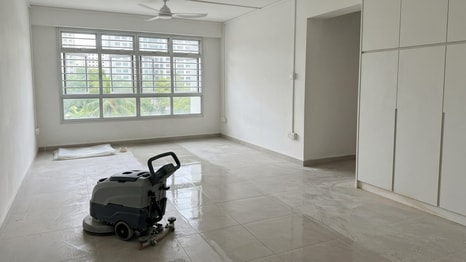
Book a post-renovation clean once the contractor finishes, to clear the dust before anything else.
Open every wardrobe, cabinet and drawer, and take out any plastic wrapping.
Keep windows open and fans running whenever someone is home; open the doors between rooms so air moves through.
On hot afternoons, close up and run the aircon rather than letting rooms bake.
Wipe the inside of new cabinets with a damp cloth before putting clothes, food or baby items in.
Measure with a calibrated meter or an accredited lab before moving in, especially for a baby’s room.
Want help with the clean-up?
Our post-renovation cleaning checklist for your BTOgoes room by room, and
post renovation vs move in vs spring cleaningexplains which service to book.
When to call in a Professional
Airing does most of the work, but it takes weeks, and many families need to move in sooner. If the smell is still strong after a couple of weeks, or a reading is above the guideline, a treatment on the carpentry is the next step. Urban Company’s Formaldehyde Removal Treatment is priced by floor area, shown before you book, with prices including GST and a $4 platform fee per booking:
Home size
Time
Price
Under 500 sqft
45 min
$200
501 to 750 sqft
60 min
$250
751 to 1,000 sqft
1 hr 15 min
$300
1,001 to 1,300 sqft
1 hr 30 min
$350
1,301 to 1,600 sqft
1 hr 45 min
$400
1,601 to 2,000 sqft
1 hr 55 min
$500
How it works: the Professional takes baseline readings in your rooms, opens every wardrobe, cabinet and drawer and dry-wipes the surfaces, sprays the treatment in a full-coverage pass, then airs the home and retests against the baseline readings. The booking page says the treatment cuts formaldehyde by 90% or more on the meter, and if the target isn’t reached, the Professional spot-treats again at no charge. There is also a one-room option.
Book it a few days before you move in, once the carpentry is installed and the home has been cleaned. Book deep cleaning first and the treatment on a later day, because the treatment needs clean, dry surfaces to bond to. See the options on the
Deep Cleaning page.
How to keep formaldehyde low before you renovate
Write low-formaldehyde boards and glue into your renovation contract.
Choose products certified under the Singapore Green Labelling Scheme or the Singapore Green Building Product scheme.
Ask the supplier for emission test reports from a lab accredited under ILAC, against the 0.124 mg/m³ panel guideline.
Build ventilation time into the schedule, so carpentry is finished weeks before you plan to move in.
Buy loose furniture early and air it, rather than unwrapping it the day you move in.
Why you can count on Urban Company for deep cleaning
Verified Professionals, who bring all the equipment and solutions.
Formaldehyde readings are taken before and after the treatment, so you see the result on the meter.
Every price is shown before you book, GST included, with a $4 platform fee per booking.
Deep cleaning and formaldehyde treatment are booked in the same app, on the days that suit you.
You can track your Professional’s arrival in the app.
Deep Home Cleaning is rated 4.63 from 8K bookings on the Urban Company website.
If a job isn’t right, open the Help Centre in the app from the booking itself. Depending on the issue, Urban Company arranges for the work to be redone or gives a refund, so you never have to sort it out with the team yourself. Help Centre:
urbancompany.com/helpcenter.
Frequently asked questions
Is formaldehyde banned in Singapore?
Only in interior paint, at 0.01% or more, since 1 January 2026. Wood boards, glue and other building products are not regulated, and there is no legal limit for the air inside homes.
How long after renovation is it safe to move in?
There is no fixed number of weeks. NEA advises ventilating for several weeks after carpentry is installed and delaying moving into heavily renovated rooms. Measure with a calibrated meter or an accredited lab to be sure.
What is a safe formaldehyde reading?
Below 0.1 mg/m³, which is 0.08 ppm, the World Health Organization guideline. Many home meters show ppm, and 1 ppm is ~1.23 mg/m³.
Does an air purifier remove formaldehyde?
Only partly. A HEPA filter alone does nothing for gases. Activated carbon or catalytic filters can take some out, but they can’t keep up with new carpentry that is still off-gassing. Ventilation does far more.
Do plants remove formaldehyde?
Not in any way you would notice. The amount a few houseplants take in is tiny compared with what new carpentry releases and what an open window clears.
How do you remove formaldehyde naturally?
Ventilate: open windows on opposite sides of the home, run fans, and keep every wardrobe, cabinet and drawer open for several weeks. Keep the home cool with the aircon on hot days, since heat speeds up release.
How much does formaldehyde removal cost in Singapore?
At Urban Company, the Formaldehyde Removal Treatment costs $200 for a home under 500 sqft, $300 for 751 to 1,000 sqft and $350 for 1,001 to 1,300 sqft, up to $500 for 2,000 sqft, including GST, plus the $4 platform fee.
Should I worry about formaldehyde in my new BTO?
If you have put in a lot of built-in carpentry, it is worth airing the flat for a few weeks and measuring before you move in, especially with a baby, young children or someone with asthma. The flat itself is not the main source; the carpentry and furniture added during renovation are.
Urban Company, home cleaning you can count on.
Checkout Our Latest Articles
Social links