

How to Choose the Right RO for Your Home

By Urban Company
6 min read
May 24, 2026
In May 2026

Buying a water purifier should be simple. In reality, it rarely is. For many households across India, the confusion starts with the water itself. Water quality isn’t what it used to be. With rising population and increasing pollution, drinking water has become inconsistent and often unsafe across cities. Today, water can contain microplastics, heavy metals, and harmful bacteria. The challenge is that you can’t always see, smell, or taste these contaminants. Water flowing from the tap may look clear, but that reveals very little about what it actually contains. This is exactly why having a water purifier at home is no longer optional. However, choosing the right purifier brings its own set of challenges. Terms like RO, UV, UF, TDS controllers, mineralisers, and copper enrichment can quickly become overwhelming, making it difficult to understand what your home truly needs. This blog simplifies that decision for you by breaking it down into a few clear, practical steps so you can choose the right water purifier with confidence.
Start with Your Water Source
The single most important factor in choosing a water purifier is understanding where your water comes from.
Municipal water is often assumed to be safe, but its quality depends heavily on the source. Water from rivers and lakes may contain industrial chemicals, pesticide runoff, and other pollutants, while groundwater can carry dissolved salts and heavy metals. Even after treatment, water can pick up additional impurities as it travels through ageing pipelines before reaching your tap.
Borewell water, which is drawn directly from underground sources, is typically high in dissolved salts, hardness, and may also contain heavy metals like iron or arsenic.
Tanker water is the least predictable. Its source can vary from one delivery to the next, making both quality and composition inconsistent.
In many urban housing societies, these sources are often mixed to manage supply gaps. As a result, the water entering your home is constantly changing. If your water source is mixed or uncertain, it’s best to choose a purifier that can handle a wide range of contaminants, rather than one designed for a specific, limited use case.
Understand What RO, UV and UF Actually Do
A common misconception is that RO, UV, and UF are competing technologies. They are not. Each addresses a different type of contamination.
UV purification uses ultraviolet light to neutralise bacteria and viruses. It works best when the water is already clear and free of chemical contaminants.
UF, or ultrafiltration, removes suspended particles and some microorganisms. However, it does not eliminate dissolved impurities such as salts or heavy metals.
RO, or reverse osmosis, pushes water through a semi-permeable membrane. This process removes dissolved salts, heavy metals, chemicals, and microbes making it the most comprehensive of the three.
In Indian conditions, especially where borewell or tanker water is involved, RO-based systems are generally the safest choice. However, buyers should be cautious about systems that use “MTDS” or blending mechanisms, where non-RO treated water is mixed back into RO purified water to maintain taste. While this can improve flavour, it may also reintroduce contaminants. If consistency and safety are the priority, a full RO system without such blending offers more reliability.
Don’t Rely Too Much on TDS Numbers
TDS, or Total Dissolved Solids, is one of the most misunderstood metrics in the water purifier market. It measures the total concentration of dissolved substances in water but it does not tell you what those substances are. Two samples of water can have the same TDS level while being vastly different in quality. One may contain beneficial minerals like calcium and magnesium. The other could contain harmful chemicals or heavy metals. The number alone cannot distinguish between the two. This is why features focused purely on adjusting TDS can be misleading. They may improve taste, but they do not guarantee safety.
Look Beyond the Upfront Price
The cost of a water purifier doesn’t stop at the price you pay on day one. In fact, that’s often just the beginning. It is important to take into consideration the filter life and total cost of ownership of the RO over the course of many years.
Filter Life
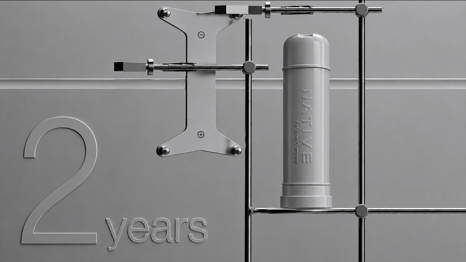
Most RO purifiers come with ongoing maintenance needs, especially filter replacements. While many brands advertise impressive numbers, such as filters lasting up to two years or handling tens of thousands of litres, real-world performance often tells a different story. Actual usage conditions like water quality, daily consumption, and pressure can significantly impact filter life.
Independent testing and user experiencesfrequently show that filters marketed to last two years may need replacement much sooner, sometimes within 6 to 12 months. This gap between claims and reality leads to more frequent servicing, higher maintenance costs, and unexpected interruptions.
Cost of Ownership
It’s important to evaluate a purifier based on its total cost of ownership over years, not just the upfront price. This includes:
It’s important to evaluate a purifier based on its total cost of ownership over the years, not just the upfront price. This includes factors like how frequently filters need replacement, the cost of those replacements, annual maintenance contracts (AMCs), warranty coverage and the reliability of after-sales service, all of which significantly impact long-term value. Over time, these recurring expenses can quietly add up—sometimes even exceeding the initial cost of the purifier itself. In many cases, a slightly higher upfront investment in a system with transparent maintenance costs and dependable support can save both money and hassle in the long run.
Plan for the Worst, Not the Best
Many buying decisions are based on the assumption that water quality will remain stable. In reality, urban water supply in India is anything but predictable. Pipelines age. Groundwater conditions change. Tanker sources vary. Seasonal fluctuations affect both quality and availability. Choosing a purifier that can handle the harshest conditions provides a margin of safety. It ensures that even when the source deteriorates, your drinking water remains protected. UV and UF systems are effective but only within a narrow band of conditions. UV addresses biological contamination like bacteria and viruses, while UF removes suspended particles and some microbes. Neither is designed to handle dissolved impurities such as salts, heavy metals, or chemical pollutants. In stable, low-risk water conditions, they can perform well. But when the source shifts their limitations become immediately visible. RO is fundamentally different. It is built to deal with uncertainty. By forcing water through a semi-permeable membrane it removes dissolved salts, heavy metals, and a wide range of chemical contaminants. This makes it the only mainstream household purification technology that consistently addresses both visible and invisible impurities across changing water conditions.
The Bottom Line
The water purifier market often overcomplicates what is, at its core, a simple goal: ensuring safe drinking water for your household. Instead of getting lost in feature lists, focus on a few fundamentals. Important ones include your water source, the type of contaminants you’re likely to face, long-term costs, and how the system fits into your daily life. When viewed through this lens, one thing becomes clear. The more unpredictable your water supply, the more important it is to choose a technology that can handle that unpredictability. And today, among widely available home purification technologies, RO offers the broadest and most consistent protection across varying water sources. A well-chosen 100% RO purifier is not just a purchase but rather a long-term safeguard for your household’s health.
FAQs
Which water purifier is best for Indian homes?
In most Indian urban settings with mixed or uncertain water sources, a full RO purifier is the safest and most reliable option.
How often do water purifiers need servicing?
Most systems require servicing every 6–12 months, along with periodic filter replacements depending on usage and water quality. However, Native ROs have a filter life of 2 years.
What is the biggest mistake people make when buying a purifier?
Choosing based on features or price instead of understanding their water source and contamination risks.
Is tanker water safe with a basic purifier?
No. Tanker water is unpredictable and may contain dissolved contaminants. 100% RO purification is strongly recommended without any MTDS of bypass features as those may reintroduce contaminants.
What matters more: brand or technology?
Technology suited to your water conditions matters more than brand. Even a well-known brand will fail if the technology is mismatched.

روابط اجتماعية